Editorial
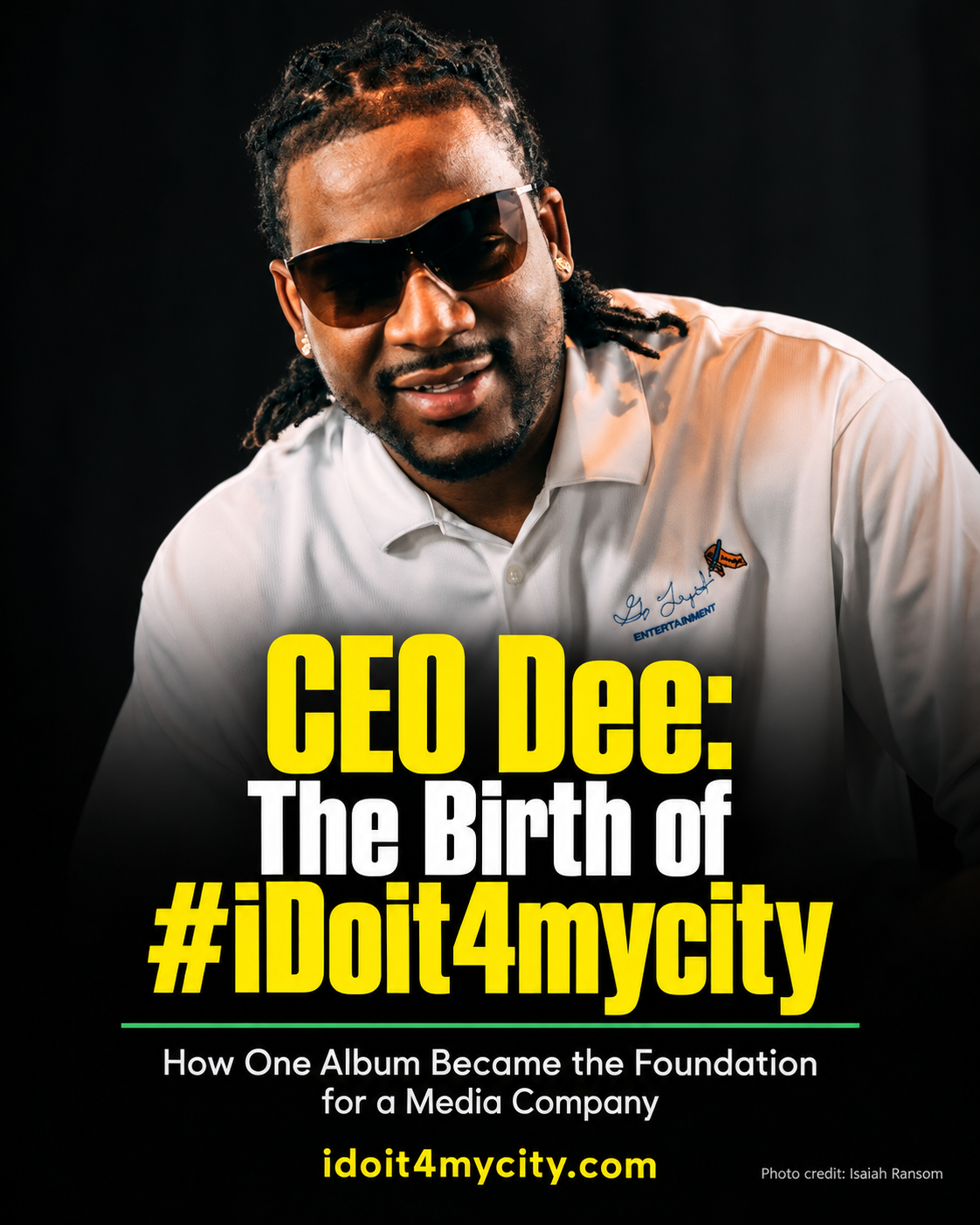
CEO Dee: The Birth of #iDoit4mycity
How One Album Became the Foundation for a Media Company
#iDoit4mycity Media · October 6, 2026
By CEO Dee
Before #iDoit4mycity became a media company, it was an album.
Before the podcasts, the interviews, the shows, and the events, there were ten songs, two producers, and a decision I had to make as a manager.
I believed in the music. I believed in the people making it. But the way I was trying to turn that music into money wasn’t working well enough to keep doing it.
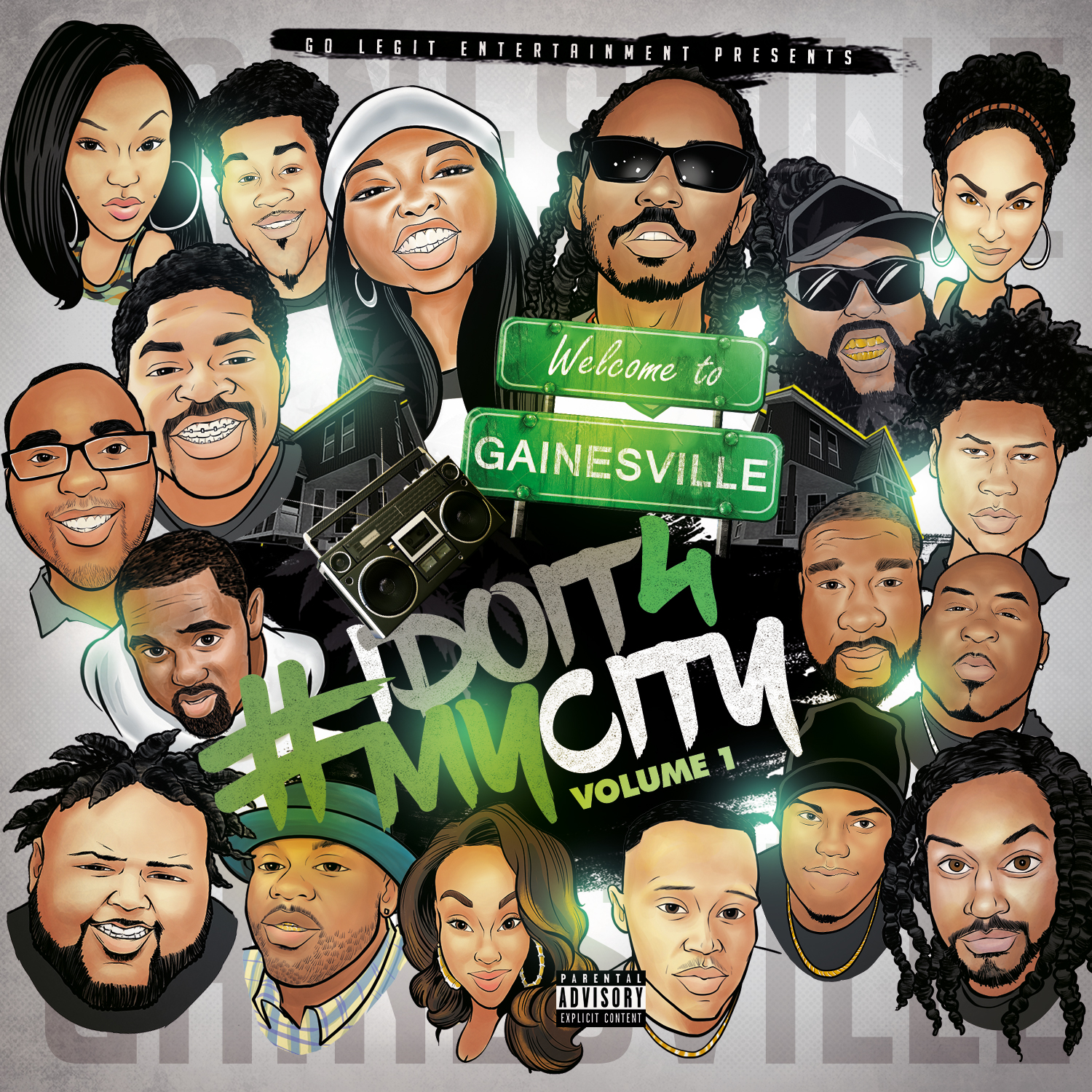
That decision became #iDoit4mycity, Vol. 1, the first full-length album I produced under Go Legit Entertainment. We released it on February 14, 2018. Valentine’s Day was intentional. I was showing my city some love.
Why I brought the music back home
At the time, I was managing DJ Terrah, a DJ and producer, and Drilla, an artist and producer. These were people I loved—my brother and my homeboy. I wanted their talent to make money for them.
I had been learning the music business since 2008: record sales, publishing, royalties, and what happens after a song leaves the studio. But much of my day-to-day work had become trying to sell beats.
I tried Gainesville first. Getting people to pay was a challenge. From my perspective, familiarity was part of it. People knew Terrah and Drilla, and sometimes it felt like they were more willing to spend with somebody outside the city than with somebody they already knew.
So I started taking trips to Atlanta.
I made some sales, but not enough to justify what I was spending to keep going. The talent was there. The business model needed to change.
One trip became the turning point. I took Drilla to a beat battle at 2 Chainz’s Pink Trap House during the promotion of Pretty Girls Like Trap Music. I wanted those beats played in front of people. I wanted to put the music in a room where it could be heard.
I left knowing I still believed in what we had. I also knew I couldn’t keep spending money on the same approach and expecting a different result.
Even if I placed a beat with a major artist, I would still be waiting on someone else’s decisions about what happened next. Back in Gainesville, I could assemble a project, organize the recording, and carry it through to release.
That brought me back to what had interested me in the first place: creating music that could generate income beyond the initial beat sale.
I decided to put an album together.
Bringing people together was the concept
The whole idea behind #iDoit4mycity was collaboration.
I wanted Gainesville artists making records together over beats by DJ Terrah and Drilla. I wanted to connect people who might know of each other without having worked together. And I wanted the finished songs to show what those producers could do.
I was doing the A&R myself—choosing the artists, imagining the combinations, sending beats, and paying for studio time at Skylab Recording Studios so those ideas could become records.
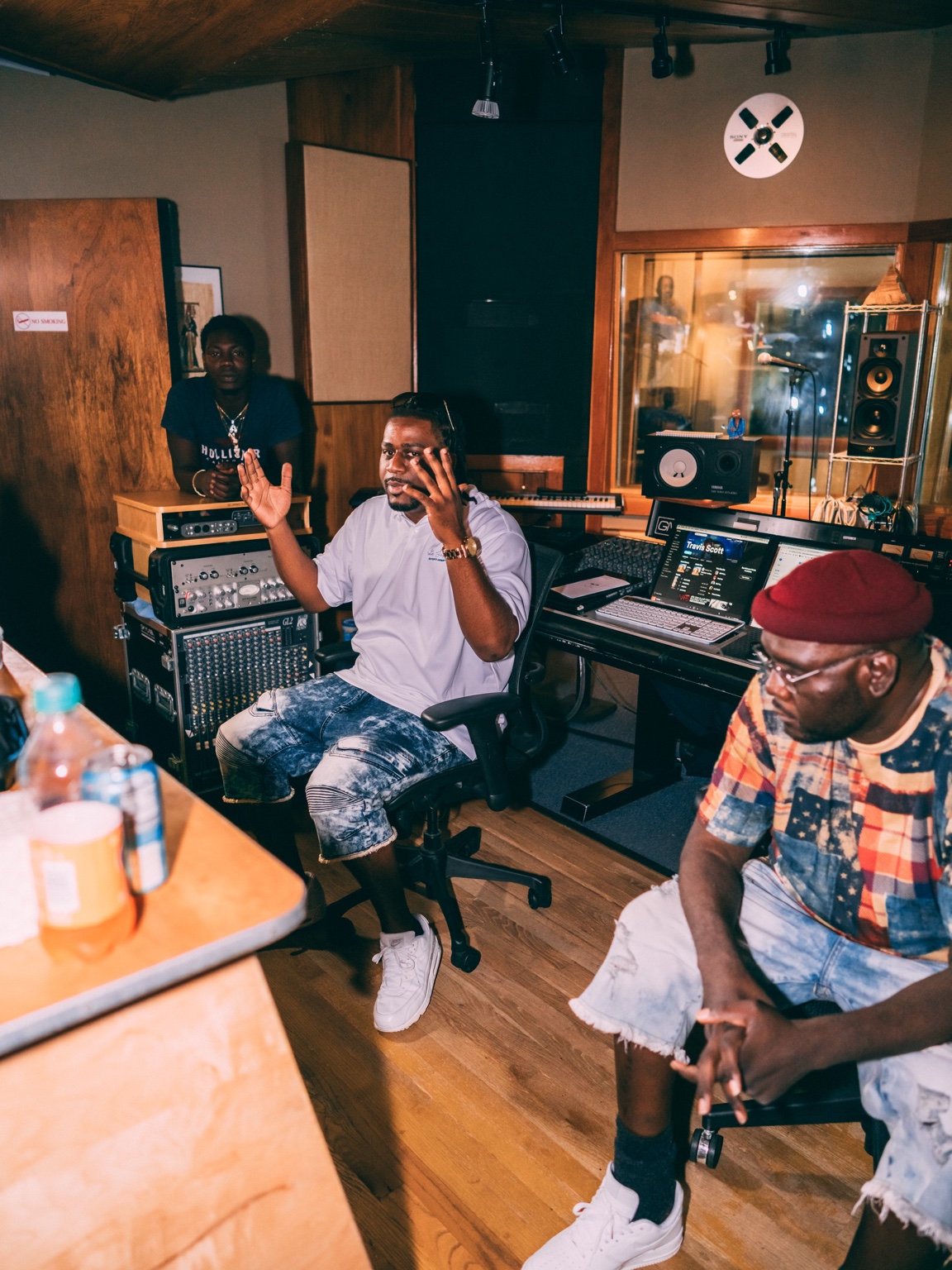
One example was Porters Rees and BankMoney James. I put them in a Facebook group chat and told them I wanted them on a song together. When I asked whether they knew each other, the answer was basically that they knew of each other, but didn’t really know each other.
Good. That was the kind of connection I wanted to make.
I gave them beats to choose from, including some of the same beats we had played in Atlanta. Once they chose one, I paid for the session. That became “Whip It”.
Watch video on YouTube — Porters Rees feat. BankMoney JamesOther connections came through people already around me. OG Po helped introduce me to Eightway Youngsta, who joined Pedro on “Came Up”. The record stayed a two-artist collaboration and became, in my experience, one of the more popular songs from the project. Those younger artists brought their own audiences with them.
Watch video on YouTube — Pedro feat. Eightway YoungstaWith OG Po, I wanted to hear something I hadn’t heard enough of in his music: a collaboration with a female artist. I brought in TeRae, and they made “Lame”, produced by Drilla. On the original release, Po was credited as Lil’ Po.
I wasn’t putting together a “best of Gainesville” collection. I was making choices about who could create something interesting together. Veterans such as Big Bud, OG Po, and my cousin Eche B. could share a project with younger and lesser-known artists.
The album gave me a way to show my own A&R, management, and project-producing abilities, even though I wasn’t ready to make myself the face of it.
Building a business where everybody could earn
I was trying to build a business where people could make money from their music. Some artists were paid for their participation in the album, including Big Bud and TeRae.
A few participants already had their publishing set up. For everybody who didn’t, I personally handled the setup. Big Bud was one of those artists. Each publishing setup cost $100.
I wanted the people making these records to be in a position to earn from them. That was part of the work I took on as a manager and part of why I put the album together in the first place. I wanted everybody to be able to eat off the project.
I wanted listeners to hear the range
I didn’t want ten records that all stayed in the same lane.
That meant bringing women into the project, involving different generations, and making room for singing, pop influences, island flavor, and street records.
“Legendary” captured that idea. I knew Sean Hunter through his engineering work and Crescendo studio in Gainesville. He was helping with mixing and radio edits, and as he understood the album’s direction, he started playing me music of his own.
On one of those recordings, I heard a woman singing. I asked who she was. He told me it was his lady, Bella.
I wanted to work with her.
I still wanted the album’s beats to come from Terrah and Drilla, so I gave Sean a Drilla beat for Bella to write to. Once her hook came back, I called Eche into the studio. Bella B.’s singing and Eche B.’s island style gave “Legendary” a different feeling from the harder records.
Ashley Michelle and Molly brought another kind of energy. I knew Molly had been writing, and I connected with Ashley through an engineer at Skylab. I put them together on a Drilla beat, and they made “Everyday”. Their lyrics were some of the rawest on the album. The women came with an edge that could surprise you.
Watch video on YouTube — Ashley Michelle feat. MollyJaimo brought a pop sensibility. That connection started with a conversation at Publix that wasn’t even supposed to be about music. I approached someone about building a website, learned he made music, and eventually got introduced to Jaimo. Later, “Superstar” helped give the album the range I wanted.
Collaboration guided the project, but I left room for records that worked on their own. K2 made “I’m K2”, and it made sense as his introduction. I didn’t need to force someone else onto a song about who he was.
The concept gave the album direction. The records still had to work.
The album found its order on the road
The sequence came together during a solo drive to Atlanta in a rental car.
I wasn’t heading out with a plan to sequence the album. I was listening to MP3s from my Dropbox, checking mixes, paying attention to the beats, and hearing what still needed work. Some records were further along than others.
As I listened, I started hearing the order.
If this song opened the album, what should come next? After the first few records, where did the listener need to go? What feeling should follow the one they had just heard?
Big Bud’s “For the City” had to open it. To me, he was Gainesville’s most popular rapper, and I had reached out because I wanted his presence on the project. His record gave us the opening statement.
Then came “Spazz”, by L. V. and BossAmi. Terrah’s production had a dramatic, cinematic quality that made it the right follow-up. Listeners who came for Big Bud could immediately hear younger voices over a beat that demanded their attention.
“Legendary” followed with Bella’s singing and Eche’s island twist. Early in the album, you could already hear that we were going somewhere different.
Then came “I’m K2”. Father, then son. That placement meant something to me.
As the order took shape, so did the production balance: five tracks by Drilla and five by DJ Terrah, alternating throughout the album. Drilla had the odd-numbered tracks; Terrah had the even-numbered tracks.
The transitions mattered. “Superstar” brought that laid-back pop feeling. “Everyday” hit right behind it with Ashley and Molly’s harder delivery. “Whip It” brought the trap energy, followed by the younger voices on “Came Up”.
I closed with “Woke!” because, to me, it was a statement song. It was lyrical, and it meant something. I wanted to leave listeners on a meaningful note, with something to think about after the music ended. It also completed the production sequence: Drilla, Terrah, back and forth across ten tracks. The last record needed to be a DJ Terrah production, and “Woke!” fit that place musically and in what it had to say. It felt like a closer.
By the time the sequence came together, I could hear the album as a complete experience.
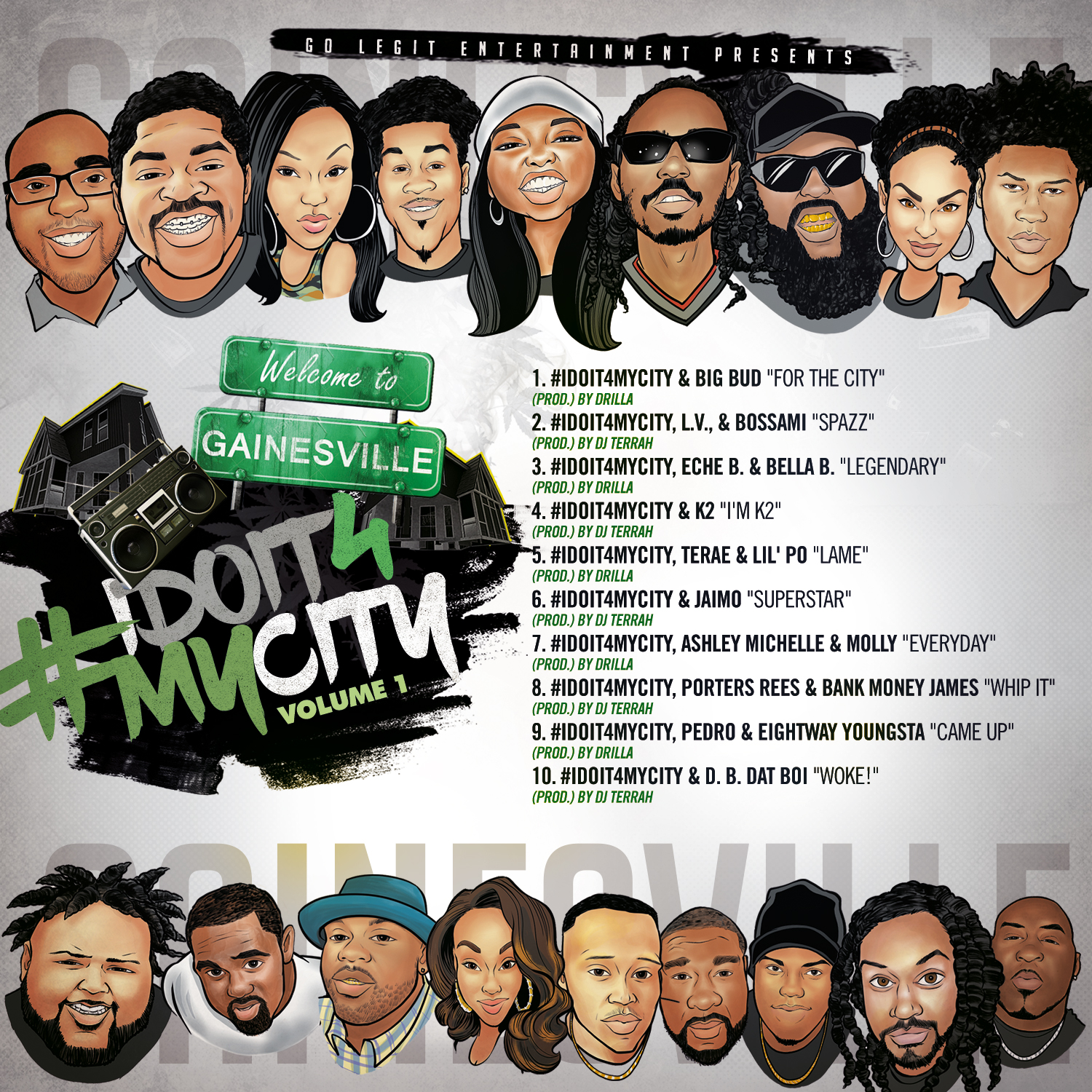
Giving the collaboration a face
The artwork solved a practical problem.
I knew getting every participant in one place, at the same time, looking their best for a photo shoot would be difficult. So I found an artist named James Thomas who drew caricatures—the kind you might see someone creating at a carnival.
I gathered pictures of the artists from social media and gave them to him. I wanted illustrated versions of everybody, but I asked him to keep the features less exaggerated than a typical carnival caricature.
Then I sent the illustrations to my graphic designer, Jonathan Lay in Orlando. I explained the concept, and he brought the pieces together into the album artwork.
Seeing that cover made the project feel real to me in a new way.
All these people, who had come into the project through different conversations and relationships, were finally together in one image.
I built part of the promotion around that. I wanted everyone involved to make the album cover their profile picture. The same artwork appearing across different artists’ pages gave people something to talk about: Who put this together? Why were all these artists on one cover? Who was that person beside somebody they already recognized?
The image communicated the collaboration before someone even pressed play.
The person missing from the cover
There was one person I never had illustrated.
Me.
At the time, I wasn’t presenting myself as CEO Dee. I was going by my name, staying behind the scenes, and promoting Go Legit as the label. I was comfortable putting the artists first.
Somebody asked why I wasn’t on the artwork. My answer was that it was about them.
I meant that. I still care about putting artists in a position to be seen.
But looking back, that question was an early sign that I needed to recognize my own contribution, too. I was developing the concept, making the connections, funding sessions, paying artists, setting up publishing, shaping the sequence, and organizing the presentation.
I carried that same behind-the-scenes mindset into the videos. I shot and directed eight music videos for the album’s ten songs, giving the artists more ways to be seen. I didn’t put my own name out front with a director credit.
The work helped establish Go Legit, and several artists from the project went on to become part of the label’s roster. I was building something while still learning to acknowledge the role I played in it.
Showing the city some love
After the recording, mixing, mastering, artwork, and preparation, I released the album on Valentine’s Day.
That date said what I wanted the project to say. I was showing Gainesville love through the talent that was already here.
The album began with a very personal goal: help people I loved make money from their music. To pursue it, I had to change my approach. That change brought artists together, created new records, and gave Go Legit its first full-length album produced under my direction.
Today, #iDoit4mycity includes podcasts, shows, interviews, and events. The ways we bring people together have grown. That original instinct is still there: recognize what people have to offer, make the connection, and help turn it into something others can experience.
When people ask where #iDoit4mycity started, I want them to know about this album.
Ten songs. Two producers. Artists from across Gainesville.
And a Valentine’s Day release to show the city some love.
Listen to #iDoit4mycity, Vol. 1 on Apple MusicListen on SpotifyProduction Credits
- Written by
- CEO Dee
- Album produced and curated by
- CEO Dee
- Beat production
- DJ Terrah
- Drilla
- Album artwork
- Jonathan Lay
- Photography
- Isaiah Ransom